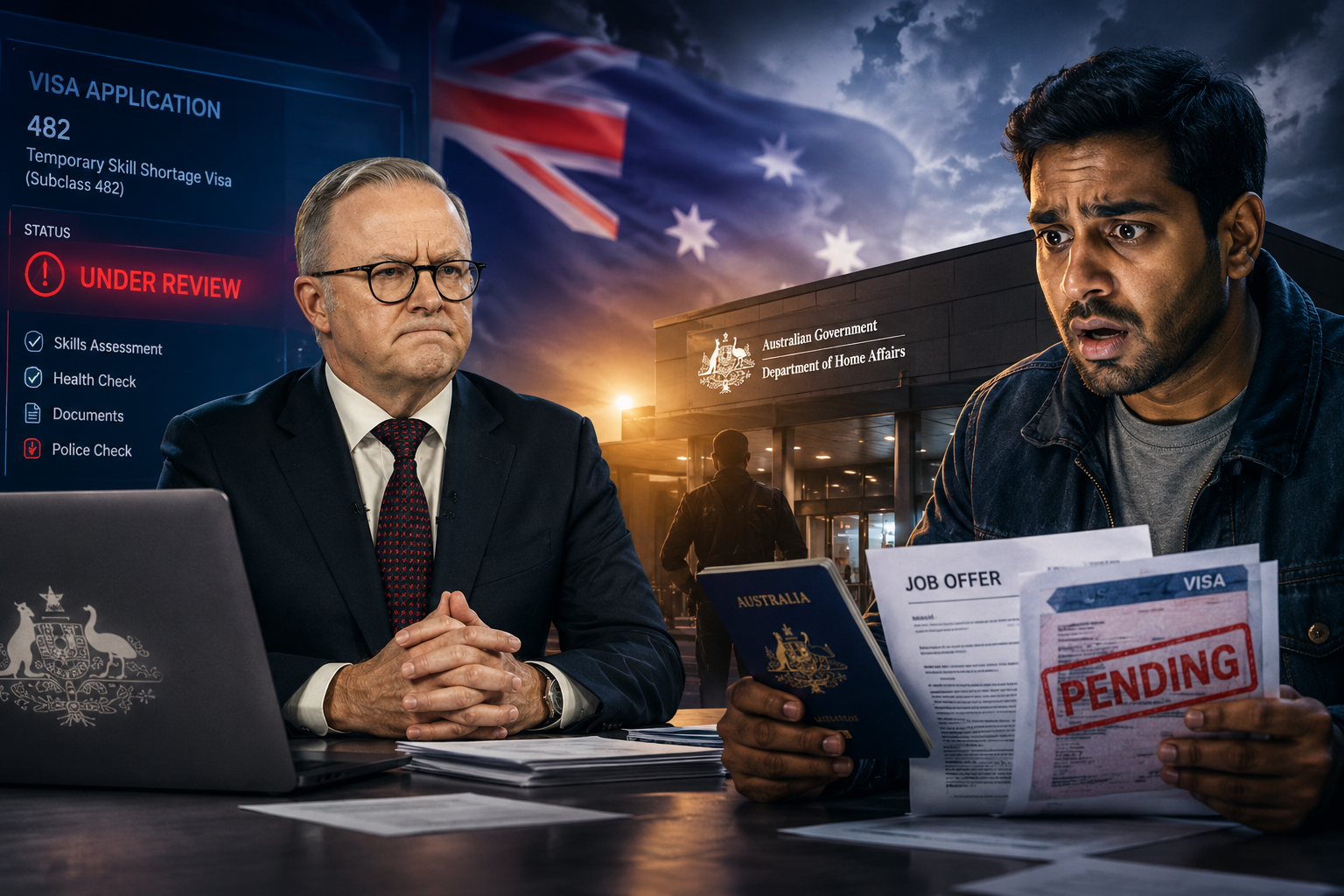
Synopsis: This blog explores the complex case of Shoaib Sohail, a legal UK migrant fired over political social media posts. It raises urgent questions about the balance between free speech and visa security, and the growing unease among legal migrants amidst immigration crackdowns and rising social tensions in Britain.
Introduction: When Expression Risks Everything
Can a political opinion cost you not just your job but also your right to stay in the UK?
That question now hangs over the life of Shoaib Sohail, a Pakistani migrant legally residing in Britain since 2008. He claims he was fired from his job at Swansea Council for social media posts supporting controversial far-right figure Tommy Robinson. More alarmingly, Shoaib fears he could be deported as a result of losing his employment — a status often tied to immigration eligibility in the UK.
His story shines a harsh light on the growing complexities facing legal migrants: navigating not just visa rules but also a sociopolitical environment where expression can morph into exile. At a time when UK immigration policy is under intense scrutiny and reform, this case touches on immigration law, freedom of speech, political bias, and the precarious lives of many resident migrants.

The Case of Shoaib Sohail
From Migrant to Controversy
Shoaib Sohail arrived in the UK in 2008 through legal means. Over the years, he integrated into British society, worked, and reportedly built a peaceful life. However, everything changed when his employer — Swansea Council — allegedly discovered his public support for Tommy Robinson, a divisive figure known for his anti-Islam rhetoric and co-founding of the English Defence League.
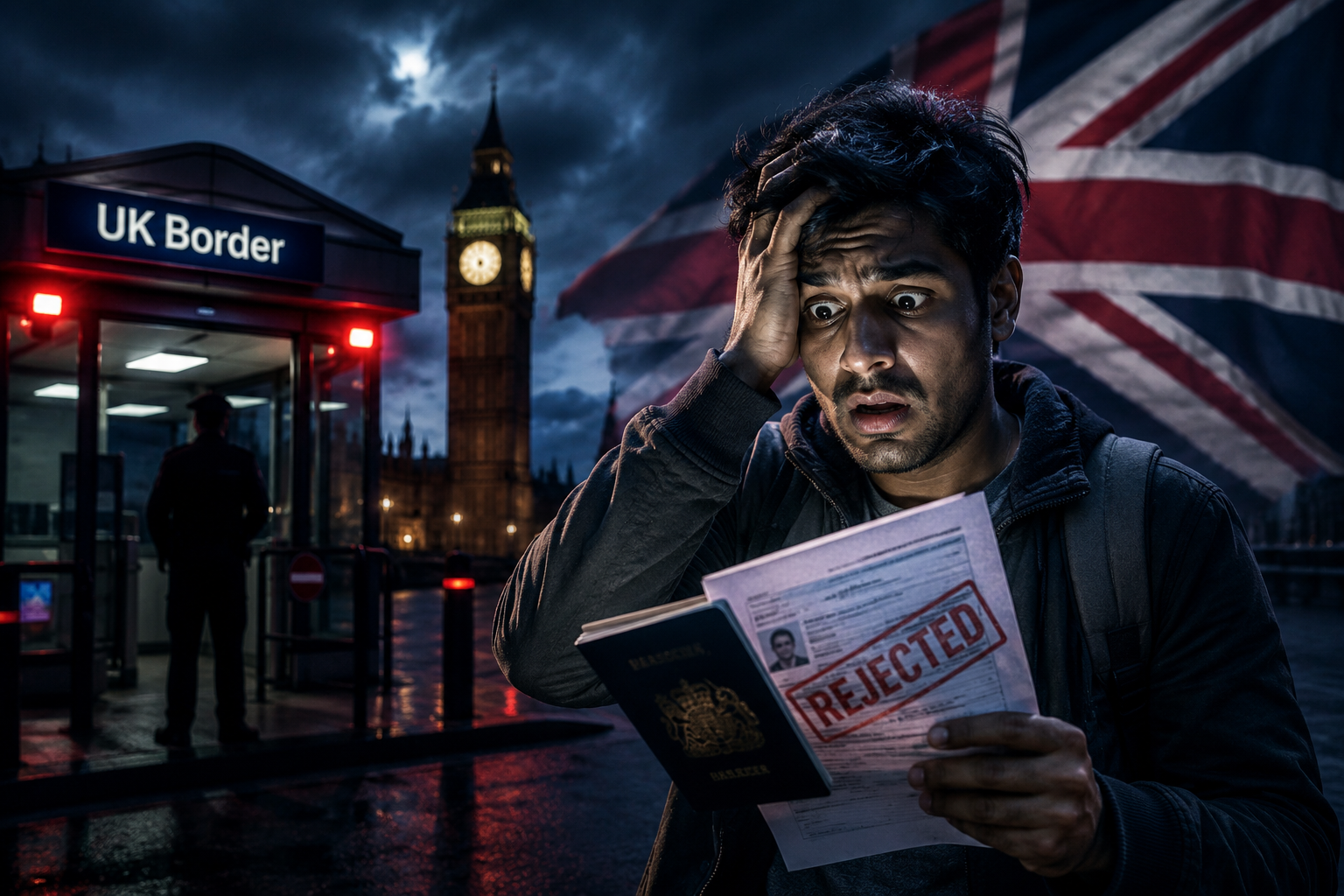
According to Sohail, senior staff demanded he delete his social media presence or face termination. He refused and was reportedly fired. What followed was an emotional spiral — not just the loss of livelihood but the looming threat of deportation, as his visa was connected to his employment status.
Political Beliefs or Professional Breach?
Was this a simple HR compliance matter or a chilling signal of ideological suppression?
Shoaib insists his views, however controversial, were not inciteful or unlawful. His support for Robinson, he claims, comes not from hatred but gratitude. “White British people have shown me so much kindness,” he said in an interview with GB News, emphasizing his admiration for “British values.”
Yet his choice to support a far-right figure triggered alarm. Swansea Council has not officially confirmed the reasons for his dismissal, but the implication is clear: expressing politically divisive views — even off the clock — can jeopardize more than just public image for immigrants.
Immigration, Employment, and the Deportation Dilemma
When Job Loss Equals Legal Risk
In the UK’s points-based immigration system, certain visa categories require ongoing employment to remain valid. Losing a job doesn’t immediately mean deportation — but it sets a clock ticking.
According to UKVI guidelines, migrants on skilled worker visas typically have 60 days to find another sponsor or leave the country. This technicality transforms a termination letter into an existential crisis. Shoaib’s fear isn’t exaggerated; many legal migrants in the UK live in this exact limbo.
Unequal Application of Enforcement?
Shoaib voiced frustration about the contrast between his fate and that of illegal Channel-crossers. “I came through the legal route, but they get accommodation, support, everything,” he remarked.
His statement reflects a growing discontent among law-abiding migrants who feel penalized while asylum seekers and undocumented individuals navigate a parallel — often softer — enforcement system. While asylum seekers face their own set of hardships, Sohail’s grievance taps into a broader narrative: do legal migrants face stricter consequences because they’re traceable and compliant?
This perceived imbalance is echoed in recent criticism of the Home Office’s enforcement strategy, with academics and migration advocates warning of “selective harshness” that undermines trust in lawful processes.
Free Speech vs Public Employment: A Legal Grey Zone
What the Law Actually Says
Free expression is protected under Article 10 of the European Convention on Human Rights, which the UK is still bound to. However, this right is not absolute — especially in public sector jobs.
Public employees are expected to uphold workplace codes of conduct, which often include policies around public statements and reputational risks. If an employee’s views are seen as conflicting with organizational values or fostering public mistrust, dismissal can be legally justified.
But that’s where the grey area deepens. Was Shoaib’s speech protected personal opinion, or a public expression misaligned with a council’s diversity standards?
Is This the “Chilling Effect” in Action?
This case brings up the growing concern around what some legal scholars call the chilling effect: individuals censoring themselves out of fear of retaliation.
When migrants believe that expressing unpopular or dissenting views could trigger job loss and deportation, society inadvertently stifles free thought — not just free speech. This tension becomes even more pronounced in multicultural democracies like the UK, where ideological pluralism is often cited as a national strength.
Broader Implications for Migrant Rights in the UK
Speech, Security, and Securitization
The UK government has introduced multiple bills aimed at curbing illegal immigration, extremism, and online harm. While well-intended in design, critics argue that these laws are being weaponized — sometimes indirectly — against dissenters.
If migrants begin to fear that political speech may be misconstrued as radicalism, it leads to societal segregation. Moreover, the growing nexus between online behavior and immigration risk — already under the lens in border security reform discussions — is deeply concerning for privacy and liberty advocates.
A 2024 report by Liberty warned that securitization of immigration enforcement has blurred lines between civil conduct and criminal suspicion, particularly in digital monitoring contexts.
Double Standards and Racial Undertones
Many are pointing out that had Shoaib been supporting a far-left figure or progressive activist, the outcome might have been different. While this claim remains speculative, the perception of ideological selectivity raises serious concerns.
Furthermore, as a Pakistani Muslim migrant supporting a white nationalist figure, Shoaib’s case does not fit expected societal narratives. This has made him a target not just of policy consequences but also of public ridicule — from both sides of the ideological divide.
What Needs to Change? Policy, Process, and Perception
Rethinking Immigration Tied to Employment
The UK’s policy of tethering visa rights to employer sponsorship creates systemic vulnerability. One HR decision, whether biased or fair, can disrupt lives, family plans, and mental health. This policy design needs urgent revisiting — a sentiment shared by Migration Policy Institute analysts who call for decoupling residency from single-employer dependency.
Instead, alternatives such as probationary open visas or multi-employer sponsorship models could offer migrants greater stability without compromising oversight.
Clarity on Political Expression for Migrants
There is a clear need for legislative and institutional clarity on what constitutes “acceptable” speech in professional contexts — especially for visa holders. Migration advocacy groups like JCWI have recommended guidance protocols to ensure public employees are treated fairly, with mechanisms for appeal and third-party arbitration in case of disputes.
Conclusion: A Test Case for UK Immigration and Democracy
Shoaib Sohail’s story may be one man’s plight — but it symbolizes a much larger crossroads for Britain.
How should a nation that prides itself on liberty, tolerance, and free expression treat someone who legally entered its borders, worked for years, and voiced an unpopular opinion?
Should his residence be conditional upon ideological conformity? Or should the right to speak — even controversially — be defended as a cornerstone of democracy, regardless of immigration status?
If the UK wants to maintain its reputation as a bastion of rights and rule of law, it must confront these questions head-on. The decisions made in Shoaib’s case may well define the tone and substance of migrant rights in post-Brexit Britain.
Frequently Asked Questions
- Can a legal migrant be deported from the UK after losing their job?
Yes, if a migrant is in the UK on a work-sponsored visa, they typically have 60 days to find another sponsor or leave the UK. Failure to do so can lead to removal under immigration laws.
- Does UK law protect migrants’ freedom of speech?
Yes, under the European Convention on Human Rights (Article 10), all individuals in the UK — including migrants — have the right to freedom of expression. However, this right can be limited in professional or public sector contexts.
- Is political expression on social media grounds for dismissal in the UK?
Potentially. Public or private employers may take disciplinary action if social media content is deemed to violate workplace codes, damage reputation, or contradict organizational values. For migrants, such dismissals can have immigration consequences if linked to visa status.
- Can migrants working for public institutions like councils be punished for controversial views?
Yes, public sector employees are often held to higher standards of neutrality and conduct. Expressing views that conflict with a council’s inclusivity or anti-extremism policies can result in disciplinary measures.
- What is the difference between legal and illegal migrants in terms of enforcement?
Legal migrants are subject to strict documentation and compliance rules, including employer sponsorship and visa renewals. Ironically, this traceability can lead to quicker penalties compared to undocumented migrants, who fall under a different, often slower, enforcement process.
- What is the UK government’s stance on online behavior and immigration?
The UK is increasingly linking immigration control with digital behavior, especially under national security, extremism, and fraud concerns. Some migrants have faced visa delays or rejections due to online content flagged during background checks.
- Can support for controversial figures like Tommy Robinson affect a migrant’s visa status?
Support alone isn’t illegal, but public alignment with individuals associated with hate speech or extremism can trigger professional consequences or scrutiny, especially for migrants in public-facing roles.
- What recourse does a migrant have after being dismissed for political speech?
Migrants can appeal internally through HR procedures or externally through tribunals. However, those on short-term visas may struggle to mount legal challenges before their right to remain lapses.
- Is the UK considering changes to employment-based visa policies?
Yes, there are ongoing discussions about reducing dependency on single-employer sponsorship models. Experts and migration think tanks advocate reforms to protect migrant workers from abrupt legal jeopardy due to job loss.
- Where can migrants get legal help in cases like Shoaib Sohail’s?
Organizations like JCWI, Liberty, and UKCEN provide legal advice, rights awareness, and assistance to migrants facing discrimination, visa issues, or wrongful dismissal.