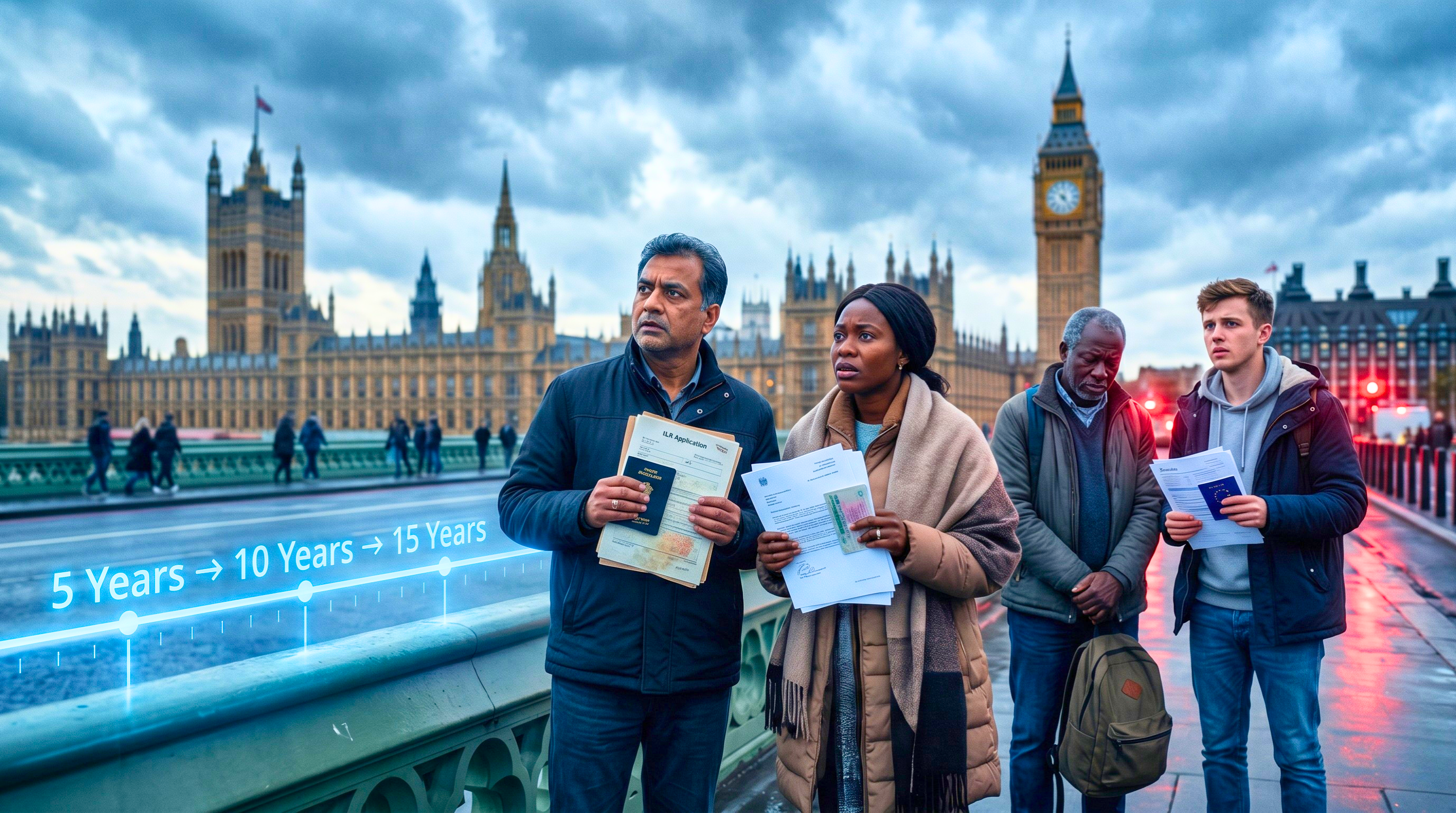
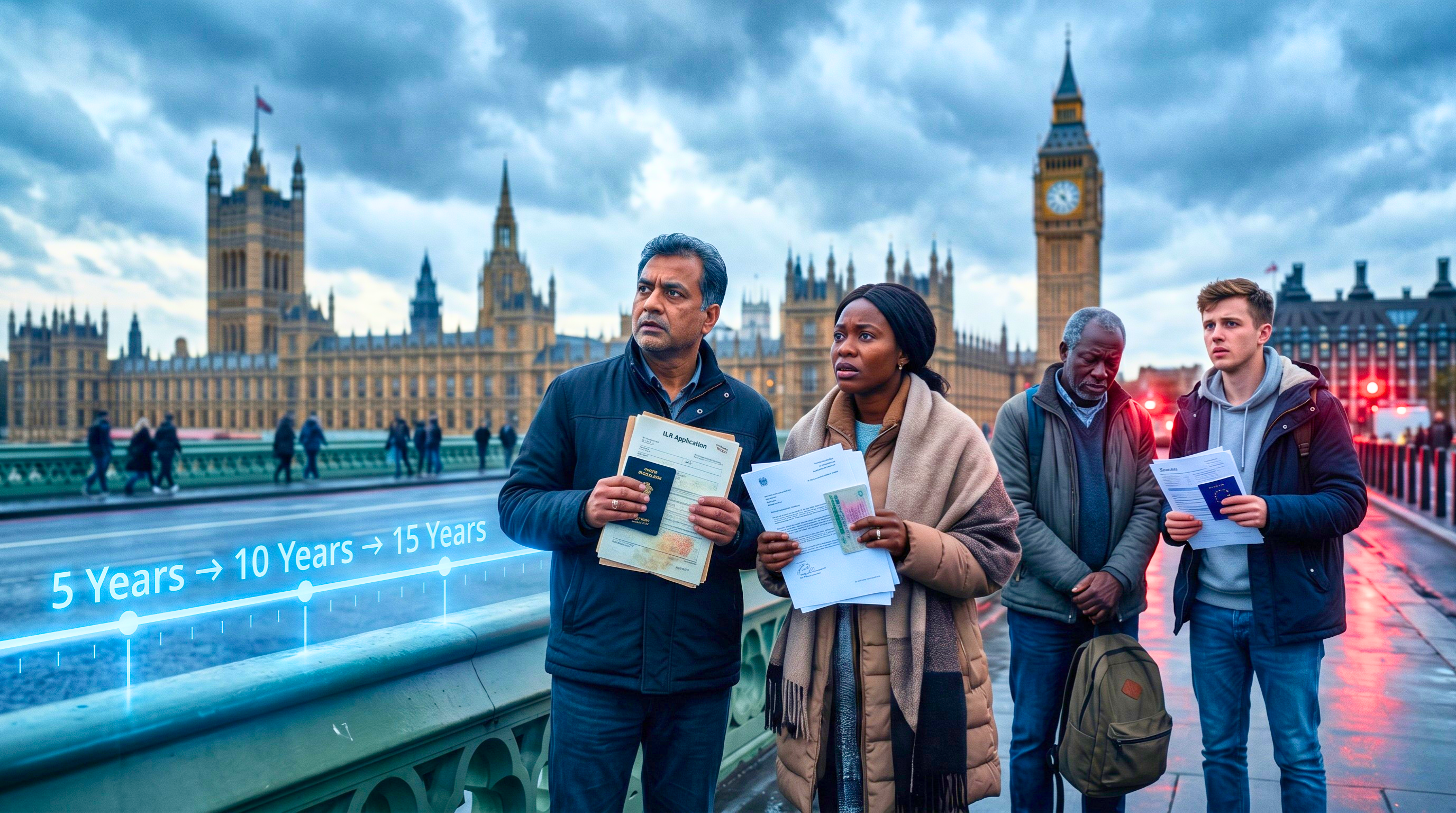
Synopsis: Facing a 20,000-person shortfall, the UK asylum housing crisis 2025 forces Labour to convert hotels, HMOs and military sites, triggering protests, council strain and legal challenges. This analysis examines costs, local impacts, human-rights risks, political fallout, and practical policy options to balance compassion with enforcement and rebuild public trust. Urgently.
A Nation at a Crossroads
By the end of this year, over 90% of local councils in Britain are expected to house asylum seekers—a policy that has ignited fierce debate over fairness, security, and the government’s handling of migration. As the housing shortage deepens, the UK faces an uncomfortable question: how far can compassion stretch when resources are shrinking?
According to the UK Home Office, asylum applications have surged to record levels, leaving more than 66,000 individuals in need of housing, while only 46,000 available spaces exist across the country. That leaves a 20,000-person shortfall.
The Labour government’s response—using disused properties, military bases, and rented HMOs—has drawn criticism for being both reactive and inconsistent. Beneath the numbers lies a deeper struggle: a clash between humanitarian ideals and the mounting public demand for order.
The full picture reveals a government under pressure, local councils stretched thin, and a public increasingly divided on what fairness truly means.

The Scale of the Crisis: Britain Runs Out of Space
A Widening Gap Between Policy and Reality
The UK’s asylum housing crisis isn’t new, but it has reached unprecedented levels. With 46,000 available placements for 66,000 asylum seekers, the shortfall represents more than a logistical challenge—it exposes structural weaknesses in Britain’s asylum management system.
Councils across England, from Bolton to Birmingham, are scrambling to convert vacant hotels and commercial spaces into makeshift accommodation. The Local Government Association (LGA) has repeatedly warned that councils are “at breaking point,” forced to stretch already limited budgets to meet central government mandates.
Many communities now host asylum seekers without consultation, creating tension among residents who feel burdened by decisions made in Westminster. As one former MP put it, “This isn’t policy; it’s a postcode lottery.”
Labour’s Response: “Smash the Gangs” and Restore Order
Prime Minister Keir Starmer has publicly pledged to “drive down migration, both legal and illegal,” framing the issue as one of national integrity. In his statement, he promised that “the only way to make it work is to smash the gangs that are running this vile trade.”
But critics argue that such rhetoric masks a lack of strategy. Political analysts note that Labour’s migration plan remains vague—relying heavily on enforcement narratives while offering little clarity on housing infrastructure, deportation logistics, or asylum processing reforms.
Former Conservative MP Louise Mensch summed up the frustration:
“If you didn’t have a serious plan before the election, what’s changed now? You can’t claim control when the system’s still overflowing.”
Indeed, despite Starmer’s assurances, data from the Office for National Statistics (ONS) shows that net migration remains above 600,000, only marginally below the record highs under the previous Conservative government.
Housing the Asylum Seekers: From Hotels to Barracks
Repurposing Britain’s Forgotten Infrastructure
Facing a housing crunch, the government has explored converting abandoned military bases and old council estates into accommodation centres. Locations once built to defend Britain are now being prepared to host those seeking refuge—a transformation symbolic of the national divide over immigration.
While officials frame it as a “temporary humanitarian measure,” local councils warn of safety, hygiene, and capacity concerns. The Migration Observatory at Oxford University highlights that large-scale asylum housing often exacerbates community tensions rather than easing them, especially when imposed without consultation.
From Asylum Hotels to HMOs
One of the government’s most controversial measures has been the shift from asylum hotels to HMOs (Houses in Multiple Occupation). For example, Bolton Council reported an increase from 200 to over 700 HMOs in just three years, largely accommodating asylum seekers.
While ministers hail this as “reducing hotel dependency,” residents view it differently. Many accuse the government of simply relocating the problem—transforming once-quiet neighbourhoods into crowded rental zones.
Critics liken it to sweeping dust across the room rather than cleaning it up. The numbers might show progress on paper, but for many communities, the lived reality is growing resentment and fatigue.
Public Reaction: Frustration, Fear, and Fairness
The Taxpayer’s Burden
Public anger stems not just from overcrowding but perceived inequity. As one commentator put it, “Imagine working two jobs to pay your rent while someone arriving on a small boat gets free housing.”
The cost of asylum accommodation reportedly exceeds £8 million per day, according to BBC analysis. Taxpayers are footing the bill for thousands of unemployed asylum seekers—many of whom are still awaiting legal processing.
In the eyes of many, this is less a humanitarian success than a fiscal failure.
Safety and Cultural Concerns
Community leaders also cite concerns over crime, safety, and cultural integration. The absence of vetting transparency and the concentration of young, single men in residential zones have sparked fears—though often amplified by sensationalist rhetoric.
Still, policymakers must acknowledge the psychological impact of rapid demographic changes on small towns. The challenge lies in balancing truth with empathy—addressing legitimate safety concerns without fuelling xenophobia.
The Political Divide: Compassion vs Control
Conservative Critiques
Opposition voices accuse Labour of mismanaging what they call a “moral and administrative collapse.” Drawing comparisons to the U.S., they point to Donald Trump’s immigration deterrence strategy, which they argue brought swift results.
Trump’s “zero tolerance” policies may have been controversial, but advocates claim they achieved what Britain has not—deterrence through clarity. “America has borders,” one pundit declared. “Britain has clipboards and councils.”
Labour’s Balancing Act
For Labour, the challenge is ideological as much as operational. Starmer’s administration faces pressure to uphold humanitarian principles while restoring voter trust after years of broken immigration promises.
The Home Secretary, Shabana Mahmood, insists that small boat crossings are “utterly unacceptable” and that cooperation with France will strengthen border enforcement. Yet scepticism remains. Many question whether “detaining and returning to France” achieves long-term deterrence or merely resets the cycle.
Media and Public Narrative: The Language of Crisis
Language shapes perception—and in this debate, words carry immense weight.
Phrases like “invasion,” “welfare Airbnb,” and “fighting-age males” dominate talk shows and tabloids, framing migration as a threat rather than a humanitarian challenge. While such framing captures public attention, it risks deepening divisions and overshadowing the legitimate complexities of migration policy.
Media analysts from the Reuters Institute for the Study of Journalism have documented how emotionally charged coverage often influences voter sentiment more than factual policy debate. The danger lies in oversimplifying—painting every migrant as a burden rather than a potential contributor.
Moral and Legal Dilemmas: Who Deserves Asylum?
The Definition of a “Genuine Refugee”
Under the 1951 UN Refugee Convention, a refugee is defined as someone fleeing persecution, war, or violence. Yet in the UK, public discourse increasingly conflates refugees with economic migrants.
Former officials argue that “most of these are fake asylum seekers,” while rights organizations maintain that the majority come from conflict zones like Sudan, Eritrea, and Afghanistan, with legitimate claims to safety.
The truth likely lies between extremes: the asylum system has indeed been exploited, but not all who seek refuge are opportunists.
Legal vs. Illegal Immigration
This distinction remains the cornerstone of the debate. Support for legal migration—students, skilled workers, family reunification—remains strong. However, illegal migration through small boats undermines public confidence in the entire system.
According to the Migration Advisory Committee (MAC), effective border control and transparent asylum pathways can restore both fairness and functionality.
Economic and Social Implications
Fiscal Impact
Housing asylum seekers is not just a political issue—it’s an economic one. The National Audit Office (NAO) estimates that asylum accommodation costs could exceed £3 billion annually if current inflow trends continue.
Meanwhile, the government’s five-year rental guarantees to private landlords—sometimes paid upfront for entire lease terms—have inflated rental prices in certain local markets. This distorts housing access for lower-income British families.
Labour Market Dynamics
Paradoxically, the UK’s labour shortages—particularly in healthcare, hospitality, and logistics—could benefit from structured immigration. Yet the chaotic asylum influx undermines public support for genuine economic migration.
A reformed policy that distinguishes between necessity and opportunity could both stabilize the economy and reduce illegal entries.
Local Voices: Communities on the Edge
Councillors from towns like Bolton, Leeds, and Leicester describe daily frustration. “We’re being asked to house hundreds without funding or support,” one local leader told the press.
Some neighbourhoods report six asylum seekers crammed into one converted residence, while local schools and clinics absorb the pressure. The result is a perception of neglect—a sense that policy decisions are being made in London while consequences unfold everywhere else.
For residents, the question isn’t just about numbers—it’s about identity. What happens when compassion collides with capacity?
Learning from Other Nations
Europe’s Mixed Lessons
Across Europe, nations like Germany and France have experimented with dispersal policies similar to the UK’s, often with mixed results. Germany’s “integration contracts” paired housing with job training and language education—yielding moderate success.
France, on the other hand, saw rising unrest as migrant centres were concentrated in low-income suburbs. Experts suggest that Britain’s approach could learn from both: humane but structured, inclusive but disciplined.
Australia’s Offshore Model
Australia’s offshore detention policy, though widely criticized, succeeded in reducing unauthorized arrivals. The UK’s Rwanda plan, introduced under the previous Conservative government, attempted a similar deterrence—yet remains stalled by legal challenges and moral opposition.
Whether Labour revisits or replaces this model remains to be seen, but public sentiment increasingly demands visible action.
The Case for Reform: Building a Functional Immigration System
Reform must address three fundamental issues: capacity, consistency, and communication.
- Capacity: Expand lawful immigration routes while investing in housing and infrastructure proportionate to inflow.
- Consistency: Enforce border laws fairly, ensuring equal treatment for all applicants.
- Communication: Foster transparency between government and citizens to reduce misinformation and rebuild trust.
Policy experts from the Institute for Government argue that piecemeal measures—like moving asylum seekers from hotels to HMOs—will fail without systemic reform of both processing and deportation mechanisms.
A Question of Fairness: Who Bears the Burden?
Britain’s welfare model was designed on the principle of reciprocity—help those who contribute, protect those who cannot. The asylum crisis strains that balance.
When working-class taxpayers see their neighbourhoods reshaped without consent, trust in the system erodes. Yet the solution cannot be cruelty. It lies in fairness—a transparent, efficient, and lawful asylum process that distinguishes between those fleeing persecution and those exploiting loopholes.
Conclusion: Towards Balance, Not Blame
The UK stands at a pivotal moment. The asylum housing shortage exposes not only logistical failures but deeper questions about national values. How can Britain remain compassionate without being naïve? How can it uphold order without losing its humanity?
A reformed migration policy—built on legal pathways, fair enforcement, and public accountability—could restore both stability and moral clarity. But until then, the nation remains caught between empathy and exhaustion, between open arms and closed doors.
As the government weighs its next steps, one truth stands firm: without structure, compassion collapses—and without compassion, structure means nothing.