
Synopsis: Navigate the latest UK immigration changes for 2024–2026. This comprehensive guide details strict new dependent rules for students, higher salary thresholds and skill requirements for skilled workers, and rising visa costs. Learn who still qualifies, how to calculate fees and maintenance funds, and expert tips to avoid costly family visa delays.
Recent changes in UK immigration laws have made bringing family members much more difficult for students and workers. Since January 2024, only government-sponsored students or those studying under a qualifying research-based postgraduate course (PhD or equivalent) have been able to sponsor their spouse/partner or children.
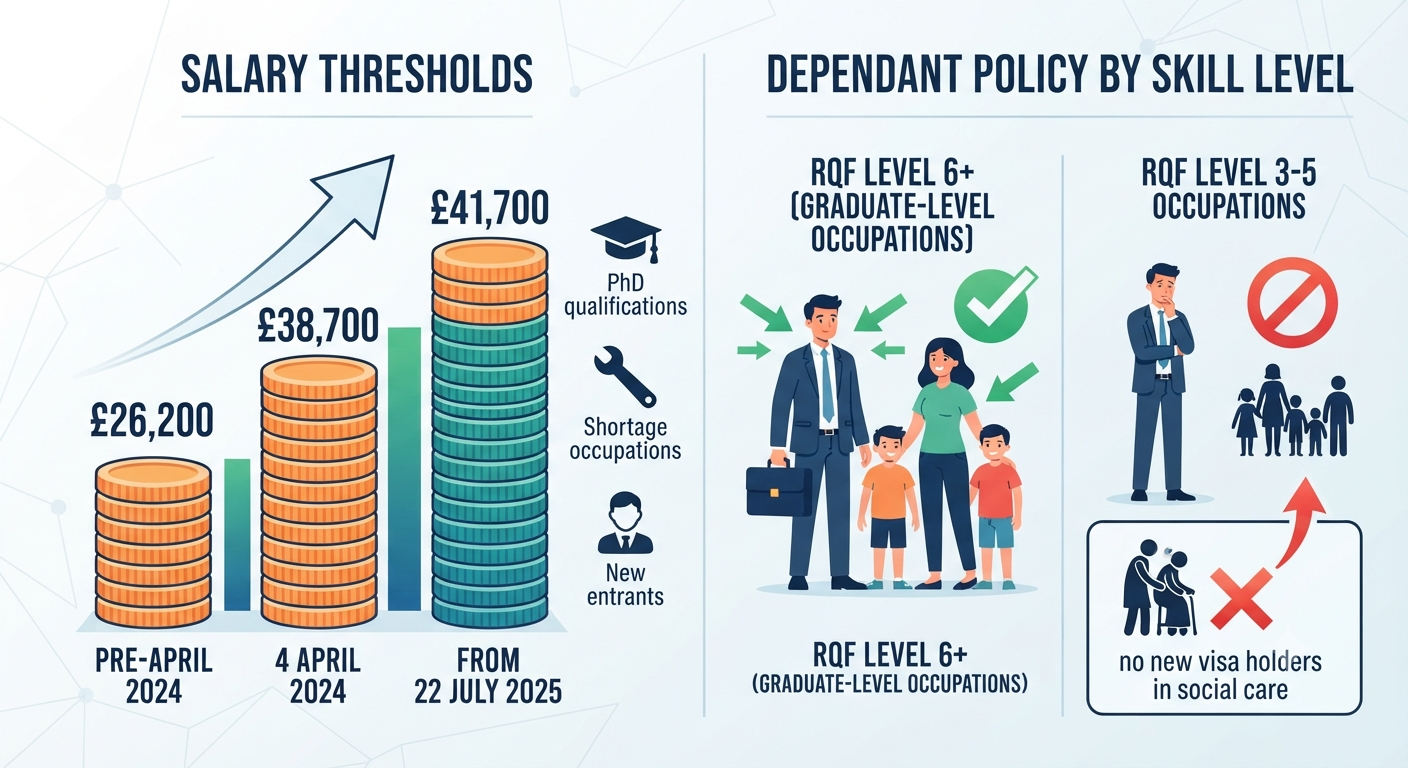
The income and skill criteria have also increased for skilled migrants, from the general threshold of £26,200 to £38,700 in April 2024 (and to £41,700 in July 2025), and many medium-skill occupations have been stripped of the ability to sponsor dependents. In the meantime, visa fees, health surcharges and maintenance fund requirements have all risen.
This article clarifies who is still able to apply, will discuss the increased fees, and provide some practical advice to prevent visa delays.

Who Qualifies as a Student with Dependants?
The majority of students with bachelor’s and taught master’s degrees are no longer able to bring their partners or children to the UK under the new restrictions. These students are the only ones who can have dependants:
- Government-sponsored students: students sponsored by a central government scholarship that covers their fees and living expenses – on courses that are more than 6 months long.
- Full-time postgraduate students: (RQF level 7+) attending full-time courses for 9+ months, beginning prior to 2024.
Postgraduate courses from 1st Jan 2024 must be research-based (a PhD or other doctorate programme) to be able to have dependants join. A typical taught master’s course is no longer considered in practice; a PhD or research master’s is required.
Dependants should be a spouse/partner or child under 18, and you need to provide proof of your relationship (marriage certificate, birth certificate, etc.). Additional financial evidence is required for every dependant.
You must have £845 per month for each dependant in London or £680 per month outside London for up to nine months. The required funds must be maintained for 28 consecutive days. Where applications are submitted together, your visa must be granted before your dependants’ visas can be issued.
Skilled Workers: Higher Salaries, Fewer Families
The bar has also gone up for the skilled worker visa holders. It increased from £26,200 to £38,700 on 4 April 2024 and then to £41,700 for most new applicants from 22 July 2025. Exceptions include some who will qualify on a lower “going rate” if they have a PhD, work in a shortage occupation or are a new entrant.
Most importantly, it is important to consider skill level when considering dependants. A 2025 policy means workers in jobs below RQF level 6 (most care, clerical or manual jobs) cannot take family members unless they are on a special shortage list.
For instance, there will be no new visa holders in the social care sector. In contrast, roles at RQF6+ (graduate-level occupations) still allow dependants as long as salary tests are met. There is some flexibility for existing workers in medium-skill roles within the system, but no flexibility for new system applicants in RQF 3-5 occupations.
Costs and Requirements: Plan for Thousands
Now it costs a lot more to bring family. Visa fees will apply per person – a student visa application fee is £558 for each applicant. The fee for a Skilled Worker visa for people outside the UK is £819 to £1,618 (depending on length). If your job is on the Immigration Salary List, the fees will be lower, at £628–£1,235. In every case, the fees and periods paid by dependants are the same as those for the main applicant.
Alongside the visa fee, all applicants aged 18 or over are required to pay the Immigration Health Surcharge. The charge is £776 per year for students and their dependent children, while most other applicants pay £1,035 per year. This means a family of three applying for a two-year student visa would pay roughly £4,680 in health surcharge fees alone (3 people × 2 years × £776).
In addition, there is also a need for maintenance funds: Students require thousands of pounds to maintain themselves and every dependant, whilst skilled workers need a minimum of £1,270 in savings (plus additional for dependants). Compile a list of all expenses before you submit your application, including fees, surcharges, and living expenses, which can add up to £5,000–£10,000 for the average family.
- Check course or job eligibility: Visit GOV.UK’s visa pages to see if your course or job is eligible for the new rules.
- Gather funds early: Show maintenance money and pay health surcharges in advance.
- Apply carefully: The main visa must be granted before dependants’ visas. Make the application six to eight months ahead.
- Seek guidance: Seek guidance from your university’s international office or immigration adviser, as minor errors may prevent families from entering.
FAQs
Is it permissible for a student enrolled in the master’s programme to bring a spouse?
Yes. Only if the course is research-based, such as MRes/PhD, or government-sponsored. There is no longer a provision for dependants in taught master’s-level courses.
Who qualifies as a dependant?
Your wife/husband/civil partner or your child under 18 or an unmarried partner. The relationship must be substantiated by evidence (marriage/civil partnership certificate or birth certificate of the child).
Would it be ok if my job were below a graduate level (RQF 3-5) and a family could come along?
Typically not any more under the new standard. If your job is not on the temporary shortage list, or if it is, then dependants are generally not allowed.
How much health surcharge do I have to pay?
The annual cost for students and dependants is £776; for most other visas, it is £1,035. Persons aged 18 and above will be charged the full rate.
What happens if I misunderstand a rule?
Things can go wrong and extend or even derail your plans. A refused application will break up families and restart the clock. Ensure you are following the most up-to-date guidance and deadlines on GOV.UK.