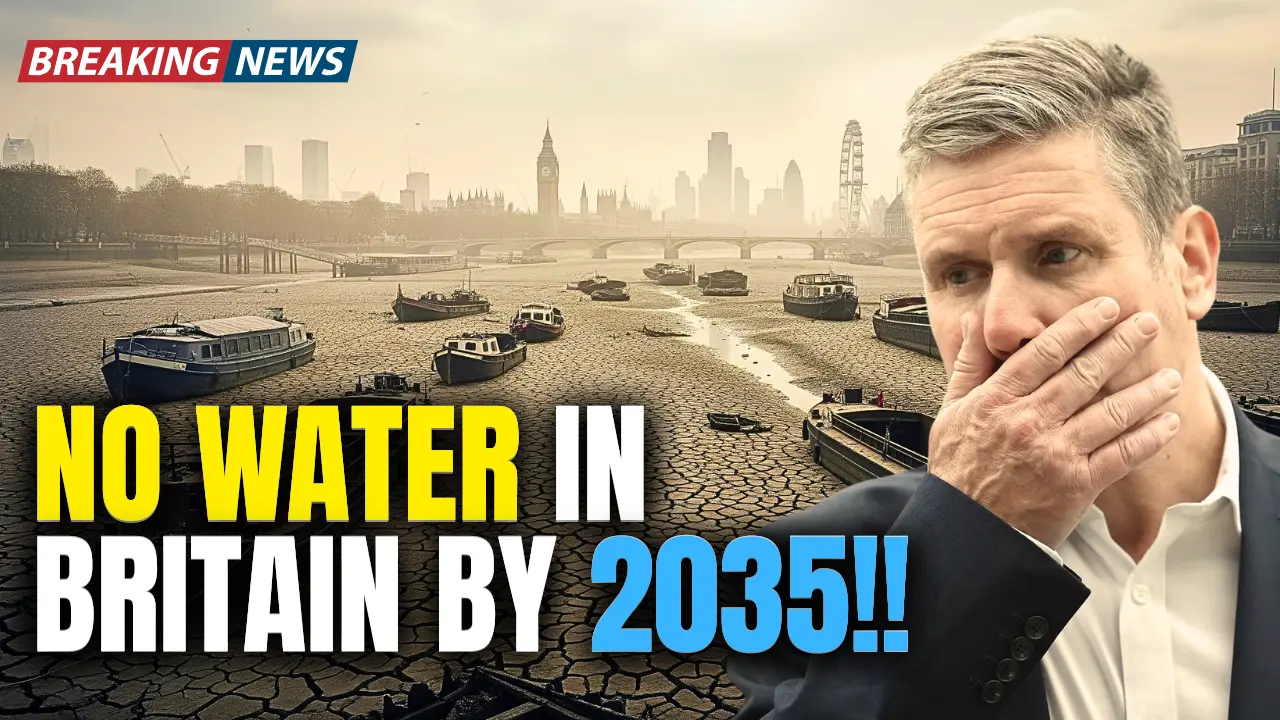
Synopsis: The UK government warns that drinking water shortages may hit some regions within a decade. Mass immigration, poor infrastructure, and climate pressures have sparked emergency measures. Ministers have fast-tracked major reservoir projects and pledged tighter immigration rules as part of a national plan to safeguard water supplies for future generations.
Could parts of the UK run out of clean drinking water by 2035? According to Environment Secretary Steve Reed, the answer is a worrying yes. With demand outpacing supply, and infrastructure buckling under rapid population growth, the government is now taking unprecedented steps to avert a national emergency.
New laws will fast-track all future reservoirs as part of this urgent response, cutting through red tape that has historically delayed major water infrastructure projects. Two massive reservoirs—one in East Anglia and the other in Lincolnshire—have already been designated as “nationally significant infrastructure projects,” allowing the central government to override local opposition.

What’s Driving the UK’s Water Shortage?
Population Growth and Mass Immigration
According to the Office for National Statistics (ONS), the UK recorded a net migration figure of 906,000 in 2023. Although this has since halved to 431,000, the population strain on resources such as water remains considerable.
Immigration is not the sole cause, but it significantly contributes to rising demand for housing, water, and energy. Thousands of homes in high-growth areas such as Cambridge and North Sussex have already been delayed or blocked due to insufficient water supply.
Aged Infrastructure and Climate Volatility
Decades of underinvestment in water infrastructure have left the country vulnerable. The National Infrastructure Commission has repeatedly warned of a looming crisis. A dry spring and receding reservoirs—like Haweswater in Cumbria, where submerged villages have reappeared—highlight the urgent need for change.
Climate change adds fuel to the fire. More frequent droughts, hotter summers, and unpredictable rainfall are depleting water reserves faster than they can be replenished.
Fast-Tracked Reservoir Projects: A Glimpse of the Future
Lincolnshire Reservoir
Slated for completion by 2040, this massive project will supply 166 million litres of water per day—enough for 500,000 homes. For context, that’s approximately 664 million cups of tea.
The Fens Reservoir
Expected by 2036, this Cambridgeshire facility will deliver 87 million litres daily to 250,000 homes in one of the UK’s driest regions.
Both reservoirs are currently in the consultation phase. They are part of a larger strategy to develop nine new reservoirs nationwide, collectively adding 670 million litres to daily supply.
DEFRA has classified these developments as critical infrastructure, a move backed by fast-track legislation.
Immigration Reform as Part of the Water Strategy?
Immigration and resource management are now deeply intertwined in government policy. Prime Minister Keir Starmer has pledged to reduce net migration, although he has stopped short of setting explicit targets.
Recent proposals include:
- Doubling the wait time for settlement.
- Scrapping care worker visas.
- Elevating skilled job eligibility to degree-level roles.
These moves, outlined in Labour’s immigration proposals, aim to curb pressures on public services and utilities, including water.
Political Fallout: Who’s to Blame?
The Labour government has faced criticism for what some see as reactive policymaking. Shadow Environment Secretary Victoria Atkins accused ministers of using immigration as an excuse to “concrete over the green belt” and warned against panic-driven legislation.
In response, a Labour spokesperson pointed to the Conservative Party’s record-high immigration levels and failure to invest in reservoirs during their tenure. They noted that Labour is building the first new reservoirs in over three decades.
The Bigger Picture: How the UK Can Prepare
Water scarcity is not unique to Britain. Countries across Europe and beyond are facing similar challenges. But the UK must act decisively:
- Implement national water-saving campaigns.
- Incentivize greywater recycling systems in new homes.
- Expand rainwater harvesting across urban and rural areas.
- Continue investment in modern infrastructure.
The Environment Agency has called for smarter water usage and tighter leakage controls across utility providers.
Conclusion: A Defining Decade for the UK’s Water Security
The coming ten years will determine whether Britain can maintain access to clean, reliable drinking water for all its citizens. Immigration reform, infrastructure investment, and climate resilience must work hand-in-hand.
As the government races to build reservoirs and tighten immigration rules, the message is clear: the time for action is now.
Frequently Asked Questions (FAQs)
- Why is the UK facing a potential drinking water shortage?
The UK’s water infrastructure has suffered from decades of underinvestment, and rapid population growth—driven in part by high net migration—has put pressure on resources. Combined with climate change and more frequent droughts, this is creating a serious supply-demand imbalance.
- How is immigration connected to the water crisis in the UK?
High immigration contributes to increased demand for housing and utilities, including water. The ONS reported a peak net migration of 906,000 in 2023, which has since dropped, but the infrastructure strain remains. Immigration is one of several factors accelerating water scarcity.
- What emergency measures has the government announced?
Environment Secretary Steve Reed has announced fast-track legislation for building reservoirs. Two major projects—in Lincolnshire and Cambridgeshire—have been declared “nationally significant infrastructure projects”, allowing the government to bypass local objections.
- Will local councils lose their authority over water projects?
Yes. Under the new fast-track laws, DEFRA now holds decision-making power over certain water infrastructure developments, stripping local councils of veto rights.
- How much water will the new reservoirs supply?
The Lincolnshire reservoir will supply 166 million litres per day, while the Fens reservoir in Cambridgeshire will provide 87 million litres. These are part of a larger national plan to add 670 million litres per day via nine new sites.
- Are there plans to curb immigration as part of this strategy?
Yes. The Labour government has introduced immigration reforms aimed at reducing pressure on public infrastructure. These include ending care worker visas, extending settlement timelines, and raising skill requirements for migrants.
- Is this crisis limited to immigration, or are other factors involved?
While immigration contributes to demand, climate change, aged infrastructure, and poor leakage control are also key contributors. The National Infrastructure Commission has long warned of the consequences of failing to modernize the UK’s water network.
- What role does climate change play in the UK’s water shortage?
Rising temperatures and reduced rainfall have made droughts more common. A dry spring in 2024, for example, has already lowered reservoir levels significantly—raising alarm bells about long-term water security.
- What are critics saying about the government’s approach?
Opposition voices, including Shadow Secretary Victoria Atkins, accuse the government of scapegoating immigration and overreaching by “concreting over the green belt”. Labour defends its actions as overdue corrections to Conservative-era neglect.
- What other solutions are being considered?
Beyond building reservoirs, the Environment Agency recommends water-saving campaigns, expanded rainwater harvesting, leak reduction, and more efficient household water systems to create a sustainable water management strategy